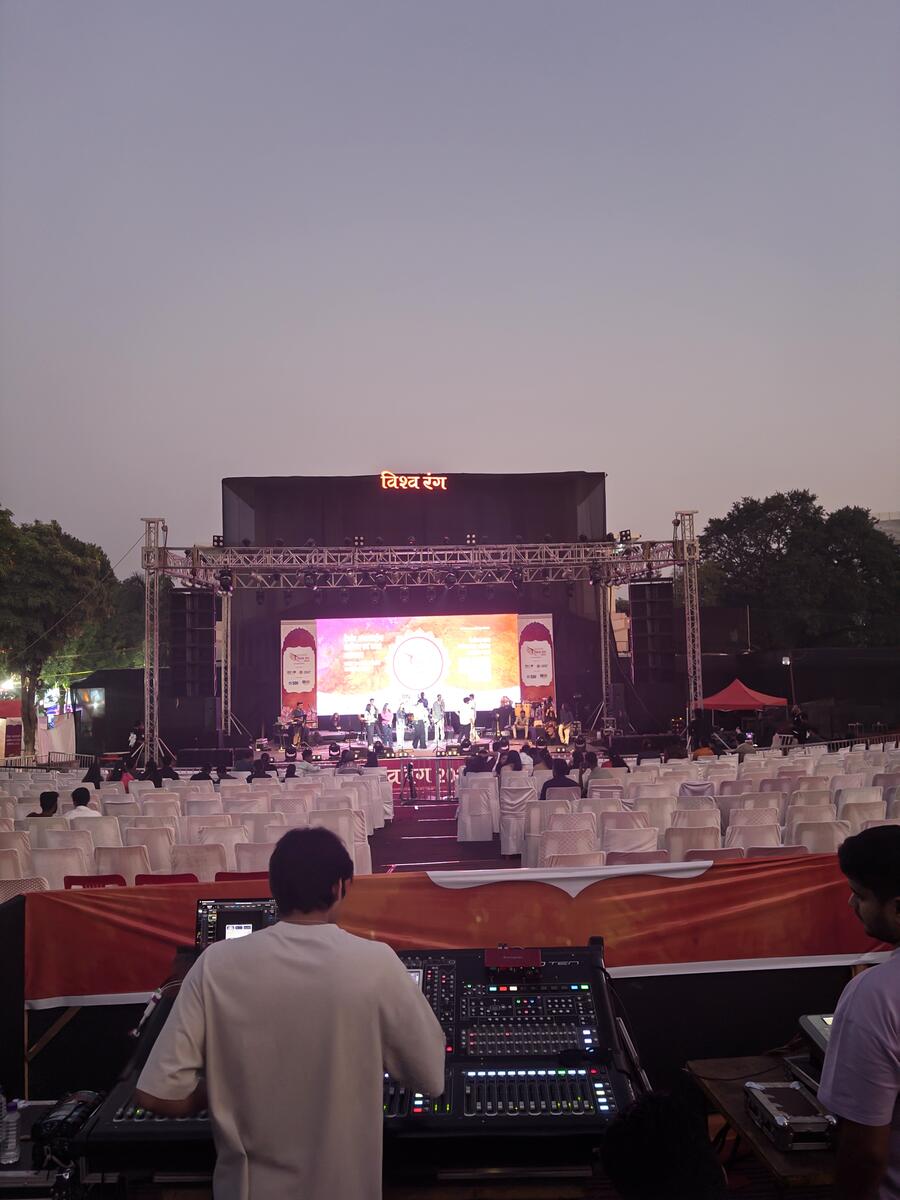
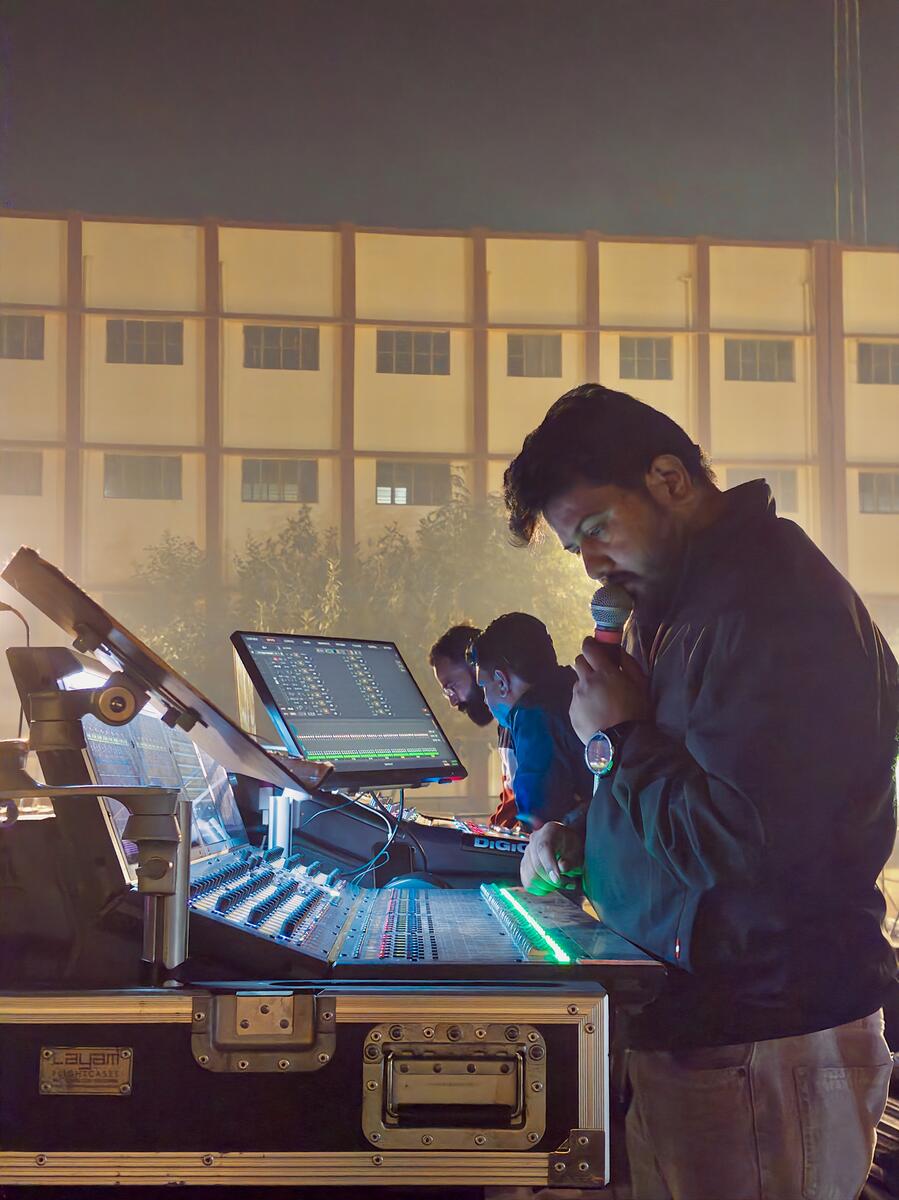
When Vishal Mishra's team confirmed the Bhopal leg of his national tour, the production brief included a specific challenge: the outdoor venue was known for unpredictable crosswinds that could wreak havoc on stage monitoring. For a vocalist whose performance depends on hearing every nuance of the backing track, a compromised monitor mix isn't an inconvenience — it's a show-stopper.
The Challenge
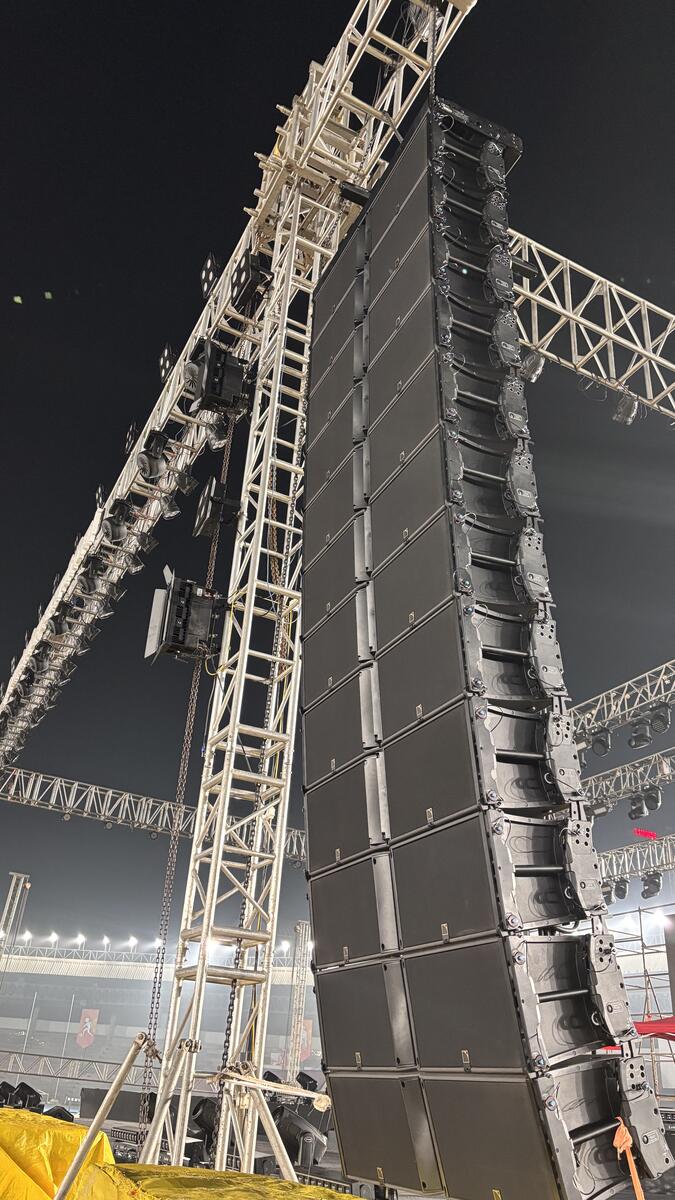
Open-air venues present a unique set of acoustic challenges. Unlike indoor spaces where walls and ceilings help contain and direct sound, outdoor stages lose energy in every direction. Add wind into the equation, and you're dealing with constantly shifting conditions that can turn a carefully tuned monitor system into an unpredictable mess.
For this show, we had 10,000 people expected in the audience, a 12-piece band on stage, and a weather forecast that promised gusts of up to 40 kilometres per hour during the evening performance window.
"In live production, the audience hears the front-of-house mix. But the artists hear the monitors. If the monitors fail, the performance fails — no matter how good the PA sounds out front."
Our Approach
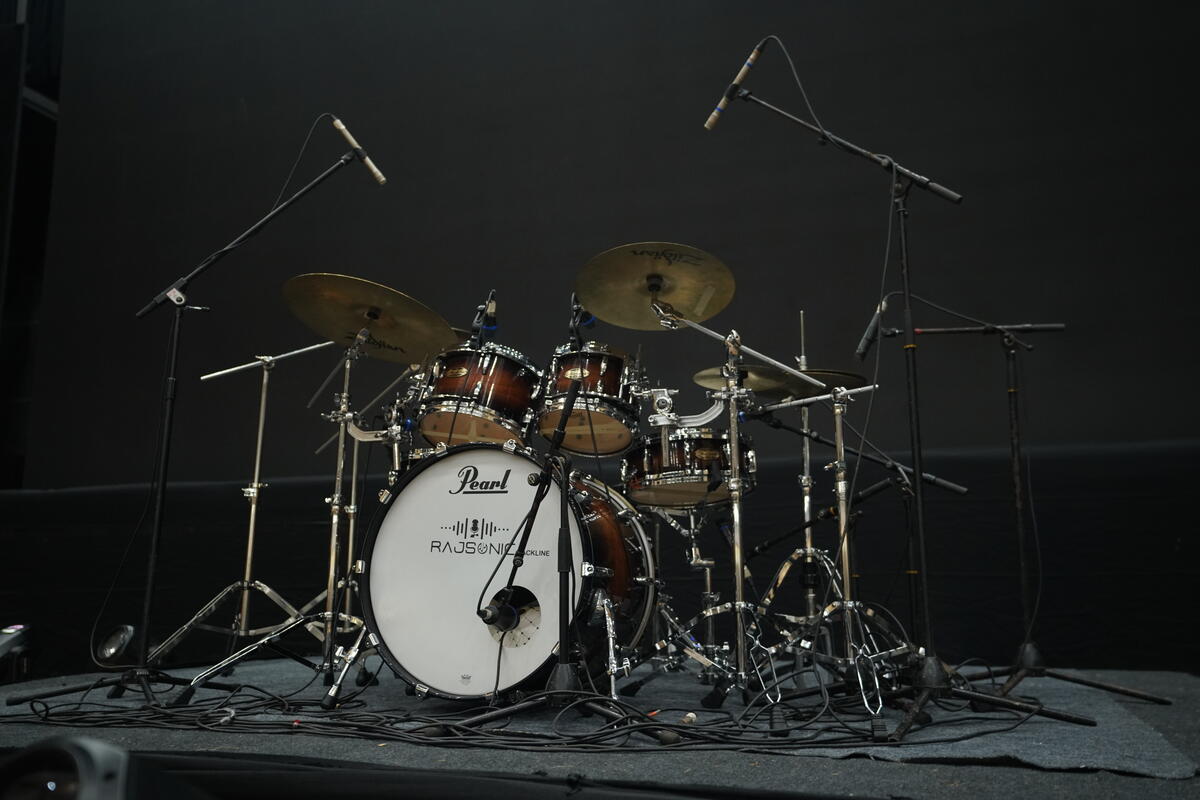
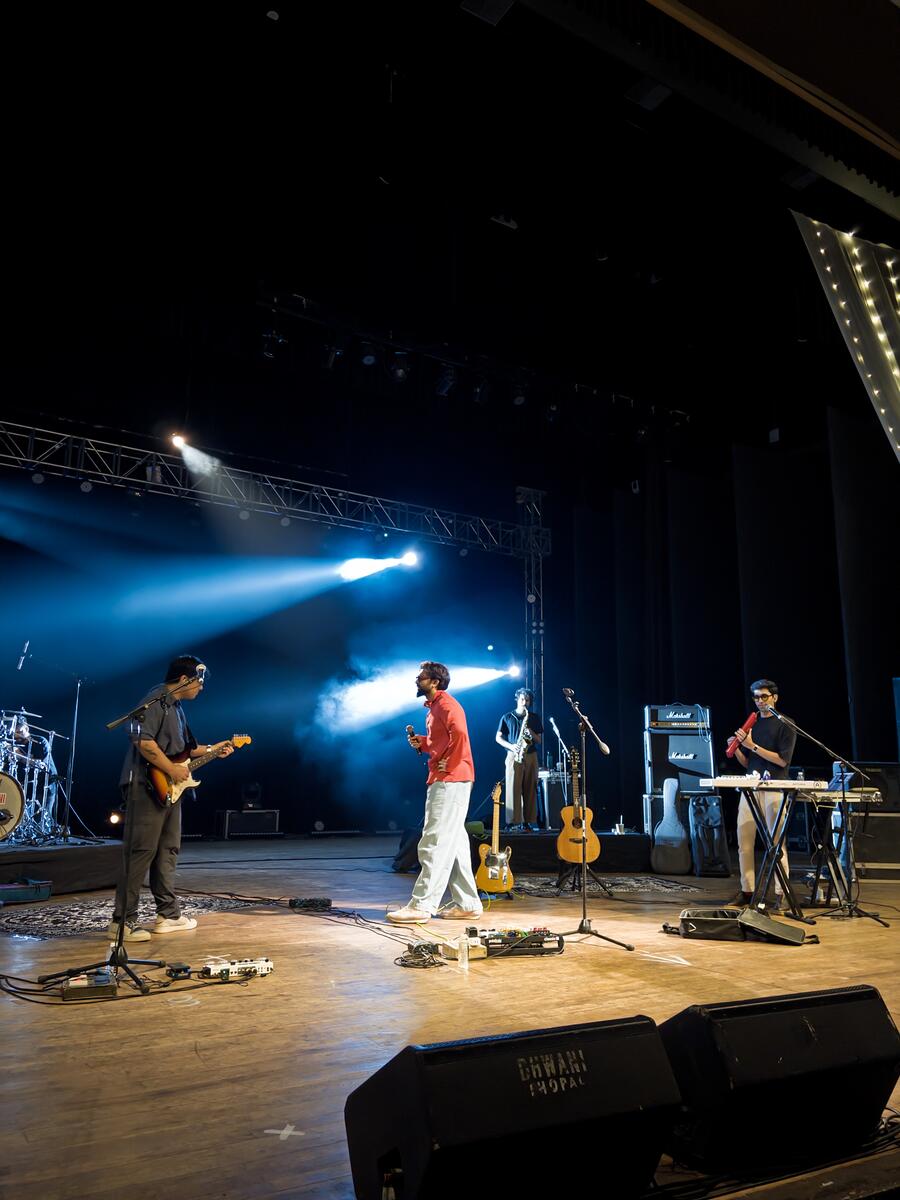
We started with the stage plot and rider three weeks before the event. Each musician had specific monitoring requirements — Vishal needed his vocal and the keyboard prominently in his wedge, the drummer needed a sub-heavy mix with click track, and the guitarist wanted a wide stereo spread of the backing track.
Rather than relying solely on traditional wedge monitors, we deployed a hybrid system: wedge monitors for musicians who preferred them, combined with in-ear monitoring for the principal vocalist and key instrumentalists. This gave us tighter control over individual mixes and reduced stage volume, which in turn reduced the impact of wind-blown sound.
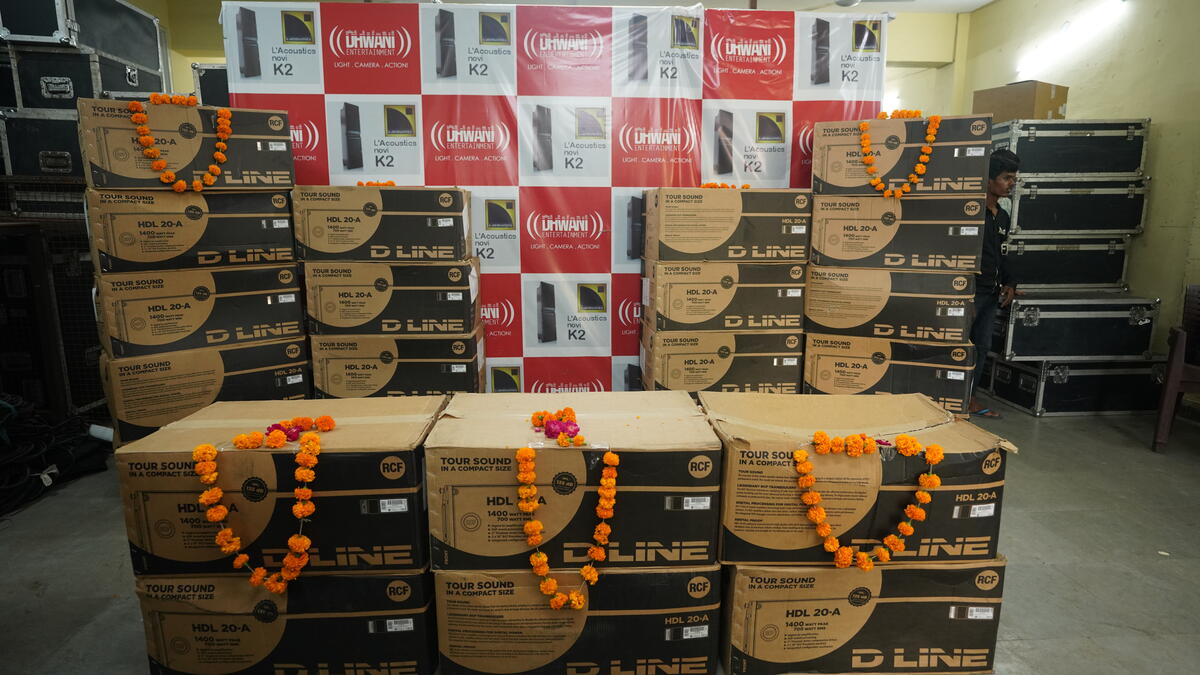
Sound check began four hours before doors. We used the time to tune each wedge to its position on stage, accounting for the angle of the wind relative to each monitor position. The in-ear systems were calibrated in a quiet environment backstage, then fine-tuned on stage during full-band rehearsal.
When the wind picked up during the performance, our monitor engineer made real-time adjustments — subtle EQ shifts to compensate for the changing acoustic environment. The result: Vishal delivered a flawless 90-minute set, and the audience never knew how hard the team was working behind the scenes.
This article is about our production for Vishal Mishra Live Tour.